The Midday Seminar Series organized by PAU Faculty of Economics and Administrative Sciences featured a session titled "Global Water Agenda and Turkey: A Water Diplomacy Perspective," held on [Date] at the B Block Conference Hall of the Faculty. Pamukkale University Rector Prof. Mahmut GÜNGÖR delivered the opening address, while Burcu ÇALLI, Water Diplomacy Expert at the Turkey Water Institute (SUEN), served as the keynote speaker, offering a comprehensive assessment of the global water crisis, the growing role of water diplomacy in international relations, and Turkey's water policies.
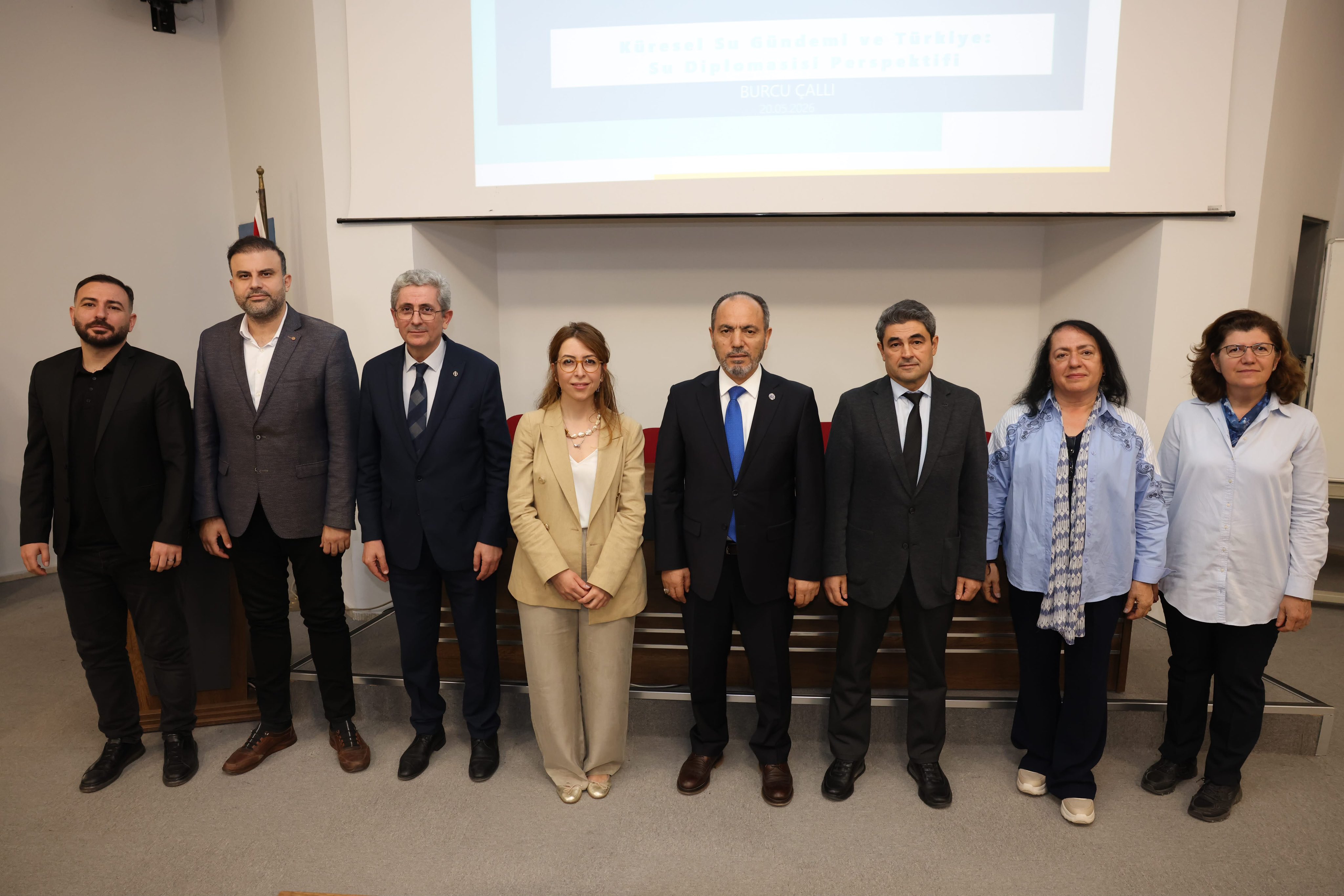
Rector Prof. Mahmut GÜNGÖR opened the seminar by emphasizing that water carries strategic significance well beyond its status as a natural resource, constituting a critical factor for humanity's future, social welfare, and sustainable development. He underlined the importance of using water resources with care and efficiency, and called for stronger public awareness around preventing water waste.
SUEN Water Diplomacy Expert Burcu ÇALLI delivered the keynote presentation to an audience of academics, administrative staff, and students. ÇALLI highlighted that although approximately seventy percent of the Earth's surface is covered by water, usable freshwater accounts for only a fraction of total global water reserves. She noted that population growth, urbanization, climate change, and shifting consumption patterns are placing mounting pressure on these already scarce resources. Drawing particular attention to agriculture's disproportionately large share of global water consumption, ÇALLI cautioned that if current trends continue, water scarcity could emerge as a significantly more acute global risk.
The seminar further examined water diplomacy not as a bilateral affair but through a multilateral and cooperative international lens. Discussions covered transboundary water issues, regional cooperation frameworks, global water governance, and the role of international organizations. Digitalization, data management, emerging financing models, and circular economy approaches were also identified as key drivers that will shape water policy in the years ahead.